
Slow leak diagnosis
Tire Losing Air Slowly? We Find the Leak
A tire that drops over days is a diagnosis problem, not an emergency yet. Emergency Mobile Tire Repair comes to the car and finds where the air is going. Then we tell you whether it is a repair or a replacement. The usual causes are a small puncture, a valve stem, or a leak at the rim.
- Puncture, valve stem or core, bead seat, wheel, or TPMS sensor seal
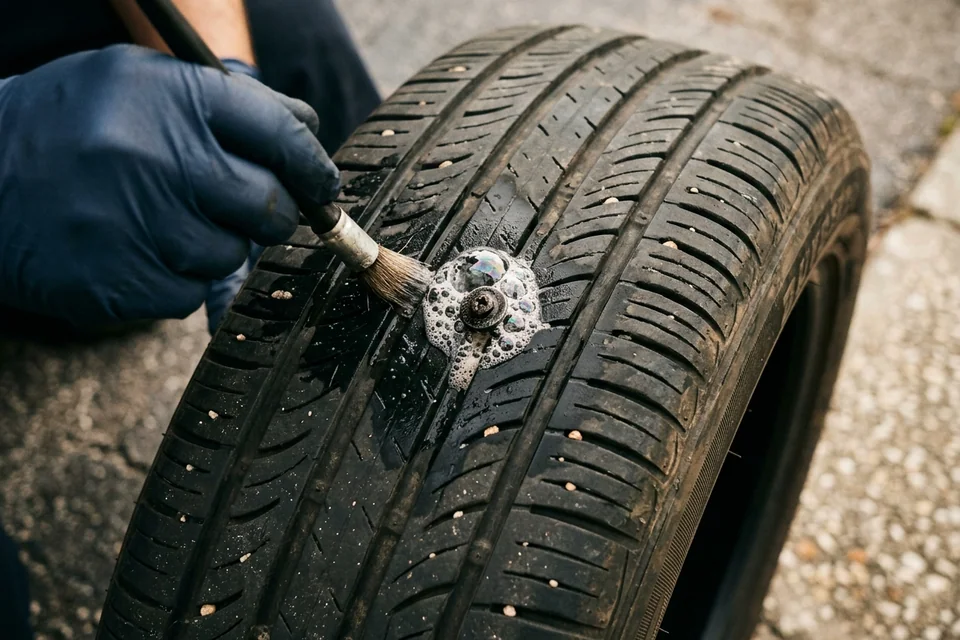
- Found with soapy water at the car, or by checking the dismounted tire in water where available
- Repaired on site when the cause is a qualifying tread puncture or a valve stem
- Leaks at the rim are diagnosed on site and your options explained
- If the tire looks low or drops overnight, stop and call before it goes flat
What it is
What a Slow Leak Usually Is
A slow leak is a tire that loses air over days or weeks instead of minutes. The pressure light comes on, you top it up, and it comes back. The air is getting out somewhere, and the fix depends on where.
The common causes are a small puncture from a nail or screw, or a leaking valve stem or core. Corrosion or debris at the bead seat, where the tire meets the wheel, is another. So is a bent or cracked wheel, or a bad seal on the TPMS sensor.
Emergency Mobile Tire Repair finds the leak at the car. A tread puncture that meets the repair rules is fixed on site. A valve stem or core is replaced when that is the whole problem. A leak at the rim or wheel is diagnosed on site and we explain your options.
We explain pricing before any work begins. Quotes are estimates until the technician sees the tire.
Why diagnose it
Why Find the Leak Instead of Topping It Up
Every item here depends on the technician being available and the cause being one we can fix on site. We say so on the call.
Stop guessing
Topping up treats the symptom. Finding the leak tells you the real fix and whether it is small.
Checked where the car sits
No shop appointment. The tire is checked in your driveway, at work, or in the hotel lot.
Repaired when it qualifies
A tread puncture within the repair limits is plugged and patched on site.
Valve stems handled
A leaking stem or core is replaced when that is the whole problem.
Rim leaks explained
If the leak is at the bead or the wheel, you hear what we found and your options.
Caught before it becomes a flat
A slow leak that runs low damages the tire. Finding it early keeps repair on the table.
The causes
Where the Air Goes
Which one it is decides the fix.
A nail or screw in the tread
The classic slow leak. The object partly seals its own hole, so the air escapes slowly.
Valve stem or core
Rubber stems crack with age and heat. A loose or worn core lets air past. Both are quick to check.
Bead seat corrosion or debris
Corrosion or grit where the tire meets the wheel breaks the seal. Often tied to corrosion on alloy wheels.
Bent or cracked wheel
A pothole hit can bend the rim lip. The tire cannot seal against it.
TPMS sensor seal
The sensor mounts through the wheel. Its seal or nut can leak.
Temperature, not a leak
Pressure changes with temperature. A small drop after a cool night is normal. A steady drop over days is a leak.
A tread puncture is a plug and patch. A valve stem is a swap. A rim or wheel leak is diagnosed on site and the options explained.
How it works
From the Pressure Light to an Answer
- 01
Call and tell us what the tire is doing
How fast it drops, how long it has been happening, and whether you hit anything. A photo of the sidewall helps.
- 02
We inflate and look
The tire is brought to pressure and checked with soapy water at the tread, the valve, and the bead. Bubbles mark the leak.
- 03
Closer check if it hides
If the leak is too small to show on the car, the tire comes off the wheel. A closer check in water follows where available.
- 04
Fix, swap, or explain
A qualifying puncture is repaired. A valve stem is replaced. A rim or wheel leak gets a clear explanation and your options.
Decide
Top Up and Watch, Diagnose, or Replace?
What each choice gets you, and what it risks.
| Criteria | Top up and watch | Mobile diagnosis and repair | Replacement |
|---|---|---|---|
| When it makes sense | One small drop after a cold night, and the light stays off afterward | The light keeps coming back, or the tire drops over days | The leak is in the sidewall, the tread is worn out, or the wheel damage makes the tire unsafe |
| The risk | The leak gets worse and the tire runs low. Driving low damages the tire | Low. The cause is found and the right fix is made | None from the leak. You buy a tire that may not have needed replacing |
| What you learn | Nothing about the cause | Where the air goes and whether repair is possible | Only that the old tire was past repair |
| What we do on site | Nothing yet. Call when it comes back | Find the leak, repair a qualifying puncture, replace a valve stem, explain a rim or wheel leak | Install your spare, or help with a replacement tire where available |
When it makes sense
- Top up and watch
- One small drop after a cold night, and the light stays off afterward
- Mobile diagnosis and repair
- The light keeps coming back, or the tire drops over days
- Replacement
- The leak is in the sidewall, the tread is worn out, or the wheel damage makes the tire unsafe
The risk
- Top up and watch
- The leak gets worse and the tire runs low. Driving low damages the tire
- Mobile diagnosis and repair
- Low. The cause is found and the right fix is made
- Replacement
- None from the leak. You buy a tire that may not have needed replacing
What you learn
- Top up and watch
- Nothing about the cause
- Mobile diagnosis and repair
- Where the air goes and whether repair is possible
- Replacement
- Only that the old tire was past repair
What we do on site
- Top up and watch
- Nothing yet. Call when it comes back
- Mobile diagnosis and repair
- Find the leak, repair a qualifying puncture, replace a valve stem, explain a rim or wheel leak
- Replacement
- Install your spare, or help with a replacement tire where available
Quotes are estimates until the technician inspects the tire. We explain pricing before work begins.
Diagnosis
Slow Leak Diagnosis, Step by Step
How we find the leak
We start with pressure. The tire is inflated to the number on the door jamb sticker and checked all the way around. A tire that is low to begin with hides leaks.
Soapy water goes on the tread, around the valve stem, and along the bead at the wheel. Escaping air makes bubbles. A puncture bubbles at the object. A stem leak bubbles at the base or the cap end. A bead leak bubbles along the rim edge.
Some leaks are too small to bubble on the car. Then the tire comes off the wheel for a closer check, in water where available. The inside of the tire is inspected at the same time.
Leaks at the rim and valve
Not every slow leak is a puncture. Air can escape where the tire bead seats against the wheel. Corrosion on the wheel, old grit, or a bent rim lip breaks that seal. These leaks often show up as a tire that is low every morning with nothing stuck in the tread.
The valve is the other usual spot. A rubber stem cracks with age and heat. A valve core can loosen or wear. A TPMS sensor mounts through the wheel and can leak at its seal or nut.
We diagnose rim and bead leaks on site and explain the options. A valve stem or core is replaced when that is the whole problem. If the wheel is bent or cracked, we tell you. That is a wheel fix, not a tire fix.
When the leak is repairable
A tread puncture up to 1/4 inch on a tire with sound tread can be repaired. The fix is a plug and patch from inside. The full repair rules are on the plug and patch page. A valve stem or core leak is a replacement of that part, not the tire.
When to stop driving on it
- The tire is visibly low or looks flat at the bottom
- It drops overnight instead of over days
- The pressure light will not stay off after a top up
- You can hear air escaping or see the object in the tread
In those cases, driving on it risks turning a repairable leak into a ruined tire. Pull over somewhere safe, put the hazards on, and call.
Questions drivers ask
Slow Leak Questions
Why does my tire keep losing air?
Something is letting air out. The usual spots: a puncture, the valve stem or core, the bead seal, the wheel, or the TPMS sensor. Finding which one is the diagnosis, and we do it at the car.
Can a slow leak be repaired?
Often, yes. A tread puncture within the repair limits is plugged and patched on site. A valve stem or core is replaced. A rim or wheel leak depends on the cause, which we explain at the car.
Is it safe to drive with a slow leak?
Top it up and get it checked soon. Do not drive on a tire that looks low; that damages the tire and the wheel. If it drops overnight, pull over safely and call.
Why is my tire leaking at the rim?
Usually corrosion or debris where the tire bead seats on the wheel, or a bent rim lip. We diagnose rim leaks on site and explain your options.
Do you repair tires or replace them?
Both, when safe. If the leak is a qualifying tread puncture or a valve stem, we fix it on site. Otherwise we help with the spare or a replacement.
Keep reading
Related Services and Pages
- Mobile tire repairWhat the service covers and how the on-site decision is made.
- Plug and patch repairThe rules for which punctures can be fixed.
- Flat tire helpWhen the slow leak has already become a flat.
- Blowout assistanceSafety steps after a sudden failure.
- All mobile tire servicesReplacement, spare installs, jump starts, lockouts, and fuel delivery.
- Tire pressure warning lightSteady, flashing, or comes and goes: what the light means before you call.
- Check your service areaEnter a ZIP or city to see if we cover you.
- Contact usHours, phone, and the request form.
Tired of Topping Up the Same Tire?
Call Emergency Mobile Tire Repair and tell us what the tire is doing. We will find the leak at the car, tell you what happens next, and give you an honest ETA.
(352) 531-6319