
Run-Flat Tire Replacement
Run-Flat Lost Pressure? Use the Allowance to Stop, Then Call
A run-flat carries the car a limited distance at reduced speed after losing air. The limit is in your manual. Use it to reach a safe place, then call Emergency Mobile Tire Repair with the tire size and the sidewall marking.
- Most run-flats are replaced, not repaired, once driven with no pressure
- Mounting at the car depends on the wheel, the tire, and the equipment. We confirm on the call
- Most cars built with run-flats carry no spare. We talk through how a replacement reaches you
- Driveways, lots, hotels, and highway shoulders where it is safe to stop
What this service is
What Happens After a Run-Flat Goes Flat
A run-flat tire has a reinforced sidewall that holds the car up for a limited distance after the air is gone. The manufacturer sets the distance and speed and prints them in the owner's manual. Check yours. Do not guess.
That allowance is for getting somewhere safe. Every mile on a flat run-flat loads the sidewall with weight the air used to carry. Once driven that way, most makers' owner's manuals say replace the tire.
Emergency Mobile Tire Repair brings replacement labor to the car. Whether a run-flat can be mounted where the car sits depends on the wheel, tire size, equipment, and technician availability. We tell you on the call.
What is different
What Changes When the Flat Is a Run-Flat
You can move, but only a little
The car can roll to a safer spot at reduced speed, within the manual's limit. Then stop.
Repair is usually off the table
Tire Industry Association guidance treats a run-flat driven with no pressure as a replacement. We check the tire and the maker's rule.
There is probably no spare
Cars built with run-flats usually skip the spare. The replacement has to reach the car another way.
The mount is harder
The stiff sidewall that holds the car up also resists mounting. Some combinations need a shop machine.
Read the sidewall
How to Tell If Your Tire Is a Run-Flat
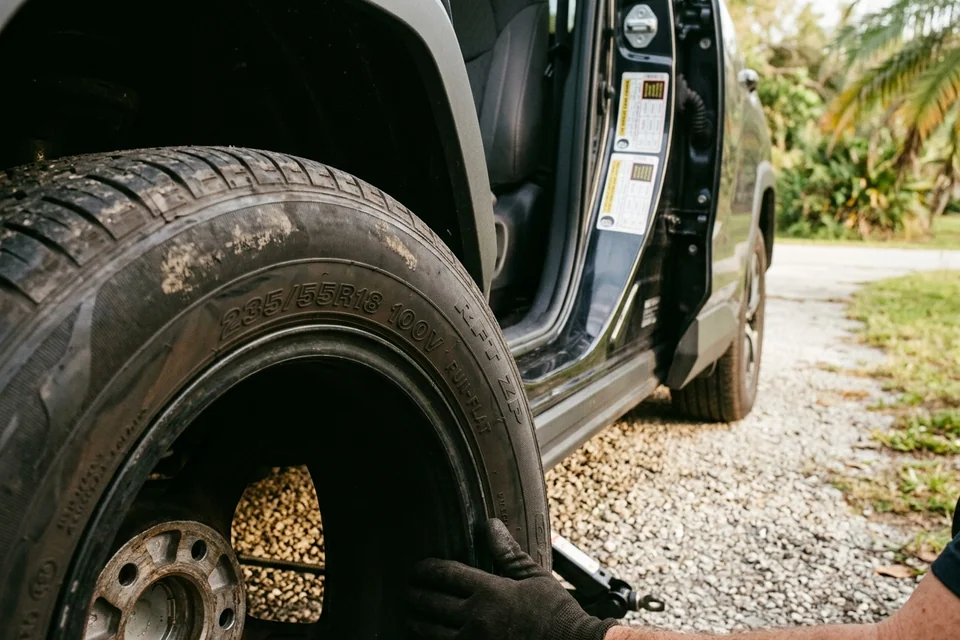
Brands use different markings. Look near the tire size, then tell us or send a photo.
RFT and ROF
Common markings from several makers. Either one means a reinforced, self-supporting sidewall.
ZP, SSR, and DSST
Zero pressure and self-supporting markings from other brands. Same rules after a loss of pressure.
The pressure light is the only warning
A run-flat does not feel flat right away. On most cars a steady TPMS light is the first sign.
Learn moreAlready driven on it
Tell us roughly how far and at what speed. That decides whether a repair is even on the table.
No marking and no spare in the trunk? Call us. A photo of the sidewall is enough to start.
How it works
From the Call to a Replacement on the Car
- 01
Call with the size, the marking, and the distance driven
Read the sidewall or send a photo. Say how far the car moved after the light came on.
- 02
We decide repair or replace, on site or shop
Based on the tire, the wheel, and the maker's guidance, we tell you what is possible before a technician is dispatched.
- 03
The tire is inspected inside
A run-flat driven with no pressure can look fine outside and be broken inside. The technician checks first.
- 04
Mount, inflate, torque, drive
The replacement goes on, pressure is set to the placard, and the wheel is torqued.
Decide
Replace Like for Like, Switch Tire Types, or Go to a Shop?
| Criteria | Replace with a run-flat | Switch to standard tires | Shop visit |
|---|---|---|---|
| Fits when | You want to keep the car as built, with the same limp-home allowance | A full set or a pair is due and you want more choice, with a plan for a spare or a kit | The wheel is damaged or the combination cannot be mounted on site |
| What to check first | The marking on the other tires. Keep both tires on an axle the same type | The owner's manual. Some makers tuned the car for run-flats | Whether the car can reach the shop inside the allowance, or needs a tow |
| What drives the cost | The tire and where it comes from | The number of tires, and later a spare or kit | The tow if the allowance is used up, plus the shop's work |
Fits when
- Replace with a run-flat
- You want to keep the car as built, with the same limp-home allowance
- Switch to standard tires
- A full set or a pair is due and you want more choice, with a plan for a spare or a kit
- Shop visit
- The wheel is damaged or the combination cannot be mounted on site
What to check first
- Replace with a run-flat
- The marking on the other tires. Keep both tires on an axle the same type
- Switch to standard tires
- The owner's manual. Some makers tuned the car for run-flats
- Shop visit
- Whether the car can reach the shop inside the allowance, or needs a tow
What drives the cost
- Replace with a run-flat
- The tire and where it comes from
- Switch to standard tires
- The number of tires, and later a spare or kit
- Shop visit
- The tow if the allowance is used up, plus the shop's work
We explain pricing before any work begins. Quotes are estimates until the technician sees the tire.
Know before you call
Run-Flat Tires Explained
The distance and speed limit
Every run-flat has a manufacturer limit for how far and at what speed it can be driven with no pressure. It is in the owner's manual and often on the sidewall. We do not quote a number because it varies by maker and model. Use the allowance only to reach a safe place.
Why most run-flats are replaced, not repaired
A run-flat with a nail in the tread can be repaired in principle, if it was not driven without pressure. The trouble is proving it. Once the sidewall has carried the car, the inner structure may be damaged in ways that do not show. Many makers advise replacement for any run-flat driven flat, and some advise against repairing them at all.
The no-spare connection
Run-flats exist partly so automakers could drop the spare. If your car has them, there is probably nothing under the trunk floor. The replacement has to reach the car another way. Our no spare guide covers the choices.
Mounting and switching tire types
The reinforced sidewall resists stretching over the rim and seating on the bead. A run-flat on a large wheel is the combination most likely to need a shop. Keep both tires on an axle the same type. Expect the TPMS light to need a drive cycle after the change.
Some drivers switch to standard tires when a full set is due. The ride is often softer, but you lose the limp-home allowance on a car with no spare. Check the manual and decide at a set change, not on the roadside.
Questions drivers ask
Run-Flat Tire Questions
How far can I drive on a run-flat with no air?
As far as the manufacturer allows and no further. The limit is in your owner's manual and often on the sidewall. Reach a safe place, then call.
Can a run-flat be repaired?
Sometimes, if the puncture is in the tread and the tire was not driven with no pressure. Once driven flat, most makers say replace it.
Can you help if I don't have a spare?
Often yes. Call with the tire size or send a sidewall photo. We talk through how a replacement reaches the car.
Should I drive on a flat tire?
Not on a standard tire. A run-flat is the exception, within the manufacturer's limit and only to reach a safe place.
Keep reading
Related Services and Guides
- Mobile tire replacementThe parent page.
- Low-profile tire replacementThe other stiff-sidewall tire.
- No spare tire guideKits, run-flats, mobile service, or a tow.
- TPMS warning light guideSteady, flashing, and what each means.
- Plug and patch repairThe repair limits for any tire.
- Check your service areaEnter a ZIP or city.
Run-Flat Done? Call With the Size and the Marking
Call Emergency Mobile Tire Repair at (352) 531-6319 with the tire size, the run-flat marking, and how far the car moved. We tell you what is possible and give you an honest ETA when a technician is available.
(352) 531-6319