
Roadside Tire Assistance
Stuck on the Road With a Tire Problem?
Get off the travel lanes, hazards on, and call Emergency Mobile Tire Repair. Tell us the road, your direction, and the nearest exit or mile marker. We tell you whether repair, a spare, or a replacement fits where you stopped, or whether a tow is safer.
- Repair, spare install, or replacement at the roadside when the spot is safe to work in
- Shoulders on I-4, US-27, and the Turnpike, plus exits, lots, and side streets
- Locking or rounded lug nuts? Tell us on the call before anyone rolls
What this covers
What Roadside Tire Assistance Means
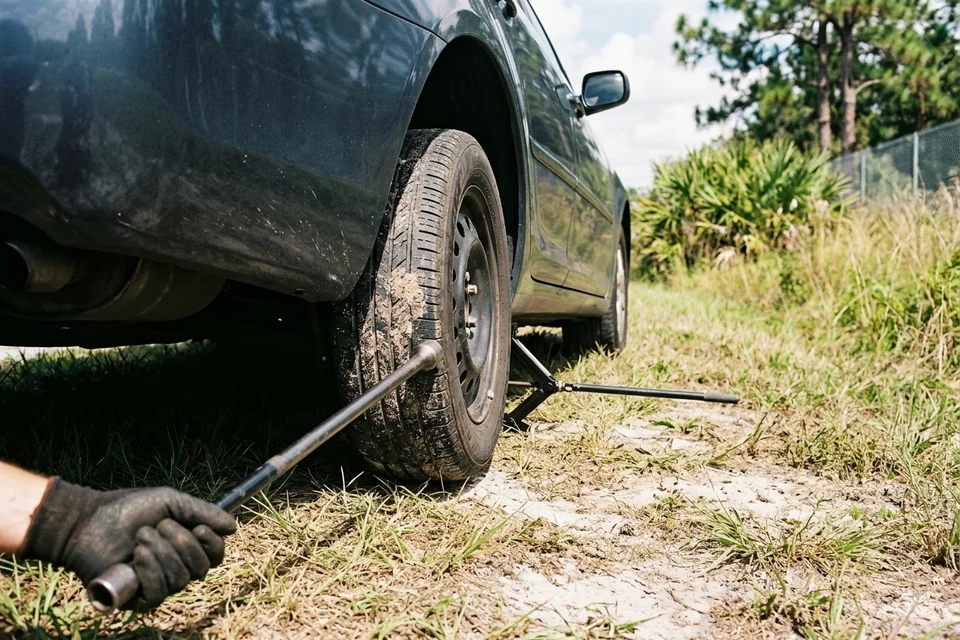
Roadside tire assistance is the tire work we do in a driveway, done where you stopped. A tread puncture gets a plug and patch repair when it is within repair limits. A usable spare goes on and gets inflated. A tire that cannot be repaired gets replacement help, where available.
The setting is the difference. On a road, the first question is whether a technician can work beside your car without standing in traffic. A wide shoulder, an exit ramp with room, or a nearby lot usually works. A narrow shoulder on a curve does not.
So the call starts with where you are. Tell us the road, your direction of travel, and the closest exit or mile marker. Then the tire. We cover Lake, Orange, Osceola, Polk, Seminole, and Sumter counties. Outside that, call anyway.
At the roadside
What We Do Where You Stopped
Three jobs and one honest answer, when the spot is safe to work in.
Plug and patch repair
A nail or screw in the tread, within repair limits, is repaired at the car. The tire stays on.
Spare tire installation
We check your spare, mount it, set the pressure, and point out its speed and distance limits.
Replacement where available
No spare and a finished tire? We help arrange a replacement and fit it at the car, depending on size and availability.
A straight answer on the spot
Shoulder too narrow or traffic too close? We say so and help you get a tow instead.
Pick your situation
Where You Are Stopped Changes the Job
Each situation has its own page.
Highway shoulder on I-4, US-27, or the Turnpike
Reaching a workable spot, what passing drivers are expected to do, and when a tow is safer.
Learn moreLocking lug nuts, no key
Where the key hides, what can be done without it, and why forcing one can cost a stud.
Learn moreStripped or seized lug nuts
Why the nut rounded off, what extraction involves, and when the stud needs replacing.
Learn moreSpare tire installation
Is your spare usable, and how far can it go.
Learn moreFlat at home or in a lot
Off the road with time to decide? Start with mobile tire repair.
Learn more
Repair availability depends on tire condition, damage location, tire size, and safety. If the tire cannot be safely repaired, we help with the next best option.
Step by step
From the Call to Back on the Road
- 01
Stop where you can be seen
Shoulder, exit, or lot, as far from the lanes as the road allows. Hazards on.
- 02
Call with your location first
Road, direction, exit or mile marker, and how much room there is beside the car.
- 03
Hear mobile or tow
We say whether a technician can work there safely and give an honest ETA when one is available.
- 04
Repair, spare, or replacement
We set up on the side away from traffic, inspect the tire, and do the one job that fits.
Decide
Roadside Service, Roll to an Exit, or Tow?
The shoulder, the tire, and the distance to the next safe spot decide it.
| Criteria | Roadside service where you are | Roll to the next exit | Call a tow |
|---|---|---|---|
| Choose this when | Wide shoulder, car well off the lanes, and a tire that can be repaired or swapped there | The exit is close, the tire is low but not shredded, and crawling beats stopping beside traffic | No shoulder, a damaged wheel, or more than one tire down |
| What it costs you later | Usually nothing extra. The job is done where the car sits | Rolling on a flat can ruin a repairable tire and damage the wheel | A shop visit, a wait, and often a second trip for the car |
| What to tell us | Road, direction, mile marker, and the shoulder width | Which exit you are heading for, so we meet you there | That you need a tow. We point you to the right help |
Choose this when
- Roadside service where you are
- Wide shoulder, car well off the lanes, and a tire that can be repaired or swapped there
- Roll to the next exit
- The exit is close, the tire is low but not shredded, and crawling beats stopping beside traffic
- Call a tow
- No shoulder, a damaged wheel, or more than one tire down
What it costs you later
- Roadside service where you are
- Usually nothing extra. The job is done where the car sits
- Roll to the next exit
- Rolling on a flat can ruin a repairable tire and damage the wheel
- Call a tow
- A shop visit, a wait, and often a second trip for the car
What to tell us
- Roadside service where you are
- Road, direction, mile marker, and the shoulder width
- Roll to the next exit
- Which exit you are heading for, so we meet you there
- Call a tow
- That you need a tow. We point you to the right help
We explain pricing before any work begins. Quotes are estimates until the technician sees the tire.
While you wait
What to Do and What to Tell Us
Stay safe while you wait
- Stay belted in if traffic is close. Get out only on the side away from the road, and only if standing clear is safer
- Leave the hazards on. At night, keep the parking lights on too
What dispatch needs from you
Road name and direction of travel come first. Eastbound and westbound on I-4 are different places. Then the nearest exit number or mile marker, or a cross street on a surface road. A hotel sign or an overpass helps too.
Next, the tire. Which corner, flat or shredded, spare or no spare, and whether the lug nuts are locking. A photo of the sidewall gives us the size.
Where we can and cannot stop
Paved shoulders with room on the traffic side, wide exit ramps, rest areas, lots, and side streets all work. A narrow shoulder, a bridge, a curve, or a live lane does not. There we help you get a tow rather than put anyone in traffic.
Roadside questions
Roadside Tire Questions
Can you come to the highway?
Yes, when it is safe to work where you stopped. Tell us how much shoulder you have. If a tow is safer, we say so on the call.
How fast can you arrive?
Response times vary by your location, traffic, and technician availability. We give you an honest ETA before dispatching.
Should I drive on a flat tire?
No. If an exit is very close, a slow crawl on the shoulder may be safer than stopping beside traffic. Otherwise stop, hazards on, and call.
Keep reading
Related Pages
- All mobile tire servicesEvery service we list.
- Highway flat tire assistanceSafe spots and when to tow.
- Locking lug nut removalMissing key, dealer codes, removal.
- Stripped lug nut removalRounded nuts and the stud underneath.
- Spare tire installationIs the spare usable, and how far.
- Jump start, lockout, and fuelJump start, lockout, and fuel.
- Check your service areaEnter a ZIP or city.
Stopped on the Road Right Now?
Call Emergency Mobile Tire Repair at (352) 531-6319. Tell us the road, your direction, and the nearest exit. We tell you what happens next and whether the spot is safe for mobile service.
(352) 531-6319